
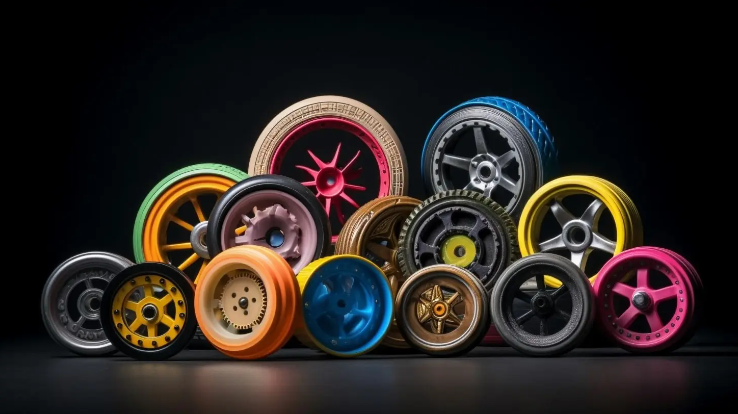
A Question That Sounds Simple but Isn’t
How many wheels are there in the world? It sounds like the kind of question a curious child might ask on a long car ride, but it has become a genuine viral debate online, sparking memes, Reddit threads, and heated arguments about whether wheels outnumber doors. At first glance, it seems like an impossible question. After all, wheels are everywhere: on cars, bicycles, toys, office chairs, shopping carts, and countless machines we never think twice about. But by looking at global production data, vehicle statistics, and a bit of careful estimation, we can arrive at a fascinating, if imprecise, answer.
There is no global wheel census. No government agency tracks every skateboard wheel, toy car axle, or office chair caster. So any number we land on is an estimate built from assumptions, industry reports, and a willingness to do some creative math. Still, that doesn’t stop us from rolling up our sleeves and giving it our best shot.
Starting With Cars
The most obvious place to begin is with cars, since they are the most visible and well-documented wheeled objects on the planet. Current estimates suggest there are somewhere between 1.4 and 1.6 billion cars in use worldwide. If we assume the average car has four wheels, that alone accounts for roughly 5.6 to 6.4 billion wheels.
But most cars also come with a spare tire tucked away in the trunk, which adds another billion or so wheels to the total. Some calculations even include the steering wheel and the internal gears of a car’s transmission, since these are technically wheels as well, though most people wouldn’t think to count them that way. Depending on how strict or generous your definition is, cars alone could contribute anywhere from 6 billion to 9 billion wheels to the global total.
Trucks, Buses, and Heavy Vehicles
Cars are just one part of the picture. Trucks and buses add significantly more wheels per vehicle. A small delivery truck might have six wheels, while a large semi-truck can have 18 or more. With roughly 200 to 300 million trucks and buses in operation globally, and an average of around six wheels per vehicle, this category alone could contribute another 1.2 to 1.8 billion wheels.
Construction vehicles like cranes, bulldozers, and excavators also use wheels, though the numbers here are smaller and harder to pin down. Estimates suggest these machines contribute somewhere in the range of tens of millions of wheels worldwide.
Bicycles and Motorcycles: The Overlooked Giants
It’s easy to focus on cars and forget about the humble bicycle, but bicycles may actually contribute more wheels to the global total than most people realize. There are an estimated 1 billion to 1.25 billion bicycles in use around the world, with more than half of them concentrated in China. Since each bicycle has two wheels, that adds roughly 2 billion to 2.5 billion wheels to our running tally.
Motorcycles, while less numerous, still play a meaningful role. With somewhere between 200 million and 300 million motorcycles in use globally, mostly concentrated in Asia, this adds another 400 million to 600 million wheels.
Toys: The Hidden Wheel Empire
If cars and bicycles seem like the obvious contributors, toys might be the biggest surprise. The scale of toy wheel production is staggering. Hot Wheels alone has produced more than 6 billion toy cars since 1968, each typically equipped with four wheels. Tonka Trucks have manufactured hundreds of millions of vehicles, many with six wheels each. Then there are LEGO cars, remote-control toys, and countless other ride-on and push toys for children, all of which add wheels to the global count.
When you factor in all toy categories combined, some estimates suggest toy wheels alone could rival or even exceed the number of wheels found on actual vehicles. It’s a strange thought, but the math holds up: children’s toys may be quietly out-wheeling the world’s cars.
Wheels You Never Think About
Beyond vehicles and toys, wheels show up in countless everyday objects that rarely cross our minds. Office chairs typically have five caster wheels each, and with hundreds of millions of office chairs in use worldwide, this adds another billion or more wheels. Shopping carts, luggage, hospital beds, wheelchairs, vacuum cleaners, and computer mice all rely on small wheels to function.
Industrial settings add even more. Conveyor belts, manufacturing equipment, and warehouse trolleys all depend on wheel mechanisms, often in significant quantities. Some estimates suggest that castors alone, the small wheels found on furniture and equipment, number in excess of 10 billion worldwide.
Adding It All Up
So, what’s the final number? Various estimates, drawing on different methodologies and assumptions, place the total number of wheels in the world anywhere between 20 billion and 93 billion. The wide range exists because different studies include or exclude certain categories, such as gears, internal machinery wheels, or toy wheels, which can dramatically shift the total.
A reasonably conservative estimate, combining vehicles, bicycles, toys, and household or office items, suggests the number likely falls somewhere between 35 billion and 50 billion wheels. This figure is almost certainly growing each year as global manufacturing increases and living standards improve in developing countries, leading to more cars, more toys, and more everyday wheeled objects.
The Wheels vs. Doors Debate
No discussion of global wheel counts would be complete without mentioning the now-famous “wheels versus doors” debate that has taken social media by storm. Estimates for the number of doors in the world, including those in homes, vehicles, and commercial buildings, generally range from 20 billion to 40 billion. Based on most calculations, wheels appear to edge out doors, largely thanks to the sheer scale of toy production and bicycle ownership worldwide.
That said, the debate remains genuinely close and depends heavily on which categories you choose to count. If toys are excluded, doors might actually win.
Conclusion
While it’s impossible to know the exact number of wheels in the world, careful estimation paints a picture of a planet absolutely covered in rolling objects, from the cars in our driveways to the toys in our children’s bedrooms and the chairs in our offices. The true number likely sits somewhere in the tens of billions, a reminder of just how deeply this simple invention from ancient Mesopotamia continues to shape modern life. Whatever the exact figure, one thing is certain: wheels truly do make the world go round.
